Most Small Business Marketing Doesn’t Fail Because of Effort
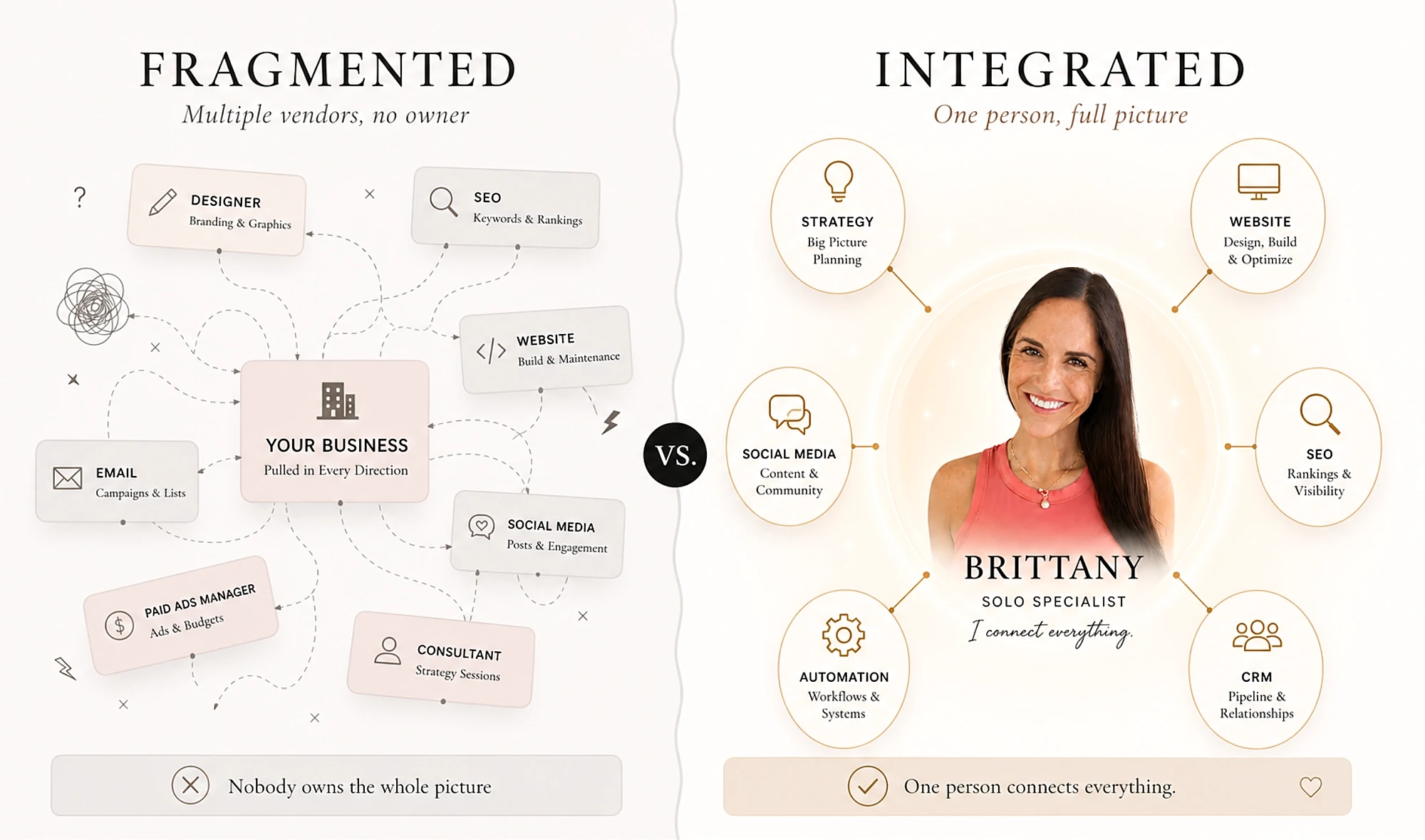
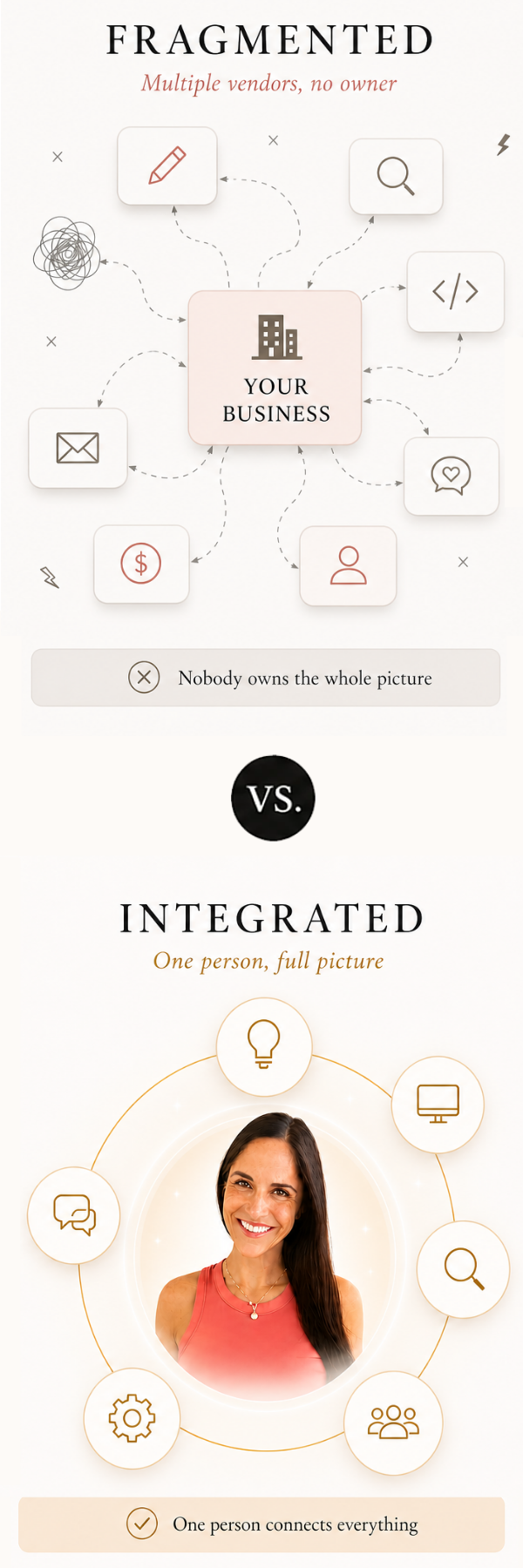
It fails because nothing is connected.
A website exists. Social media exists. Maybe email marketing, maybe ads. Each piece is technically in place, but they operate in isolation, with no structure tying them together and no defined path from attention to action.
The result feels exactly how it looks: inconsistent, reactive, and impossible to scale.
The Real Problem Isn't Execution
The instinct when marketing isn’t working is to do more. Post more. Run ads. Refresh the content. It’s an understandable response, but it’s the wrong one.
Adding activity to something that isn’t structured doesn’t fix it. It creates more noise around a problem that was never about volume to begin with.
The actual issue is that there’s no system. No defined path that takes someone from discovering your business to trusting it enough to buy.
What a Marketing System Actually Is
A marketing system isn’t a stack of tactics. It’s a structured flow where every touchpoint has a role and everything is connected.
At a high level, it works like this:


Without this structure, marketing becomes guesswork. With it, every decision has a reason, and every result has a place to point back to.
Where Most Businesses Break Down
In my experience, the breakdown usually happens in one of three places.
Attention without capture
Traffic comes in, but there's no clear mechanism to turn it into leads. Visitors arrive and leave with nothing to hold on to.
Leads without nurture
Someone expresses interest, but there's no follow-up system to build the trust that leads to a sale. The opportunity quietly disappears.
Activity without refinement
Effort is happening, but nothing is being measured. Without data, there's no way to know what's working or why.
Each gap weakens everything else in the system.
What Changes When You Build It Right
When a real marketing system is in place, the shift is noticeable quickly. Messaging gets clearer. Content has a job to do. Leads come in consistently. Follow-up happens without anyone having to remember to do it. And results become something you can actually see and act on.
Instead of constantly asking what to do next, the system answers that for you.
The Shift That Changes Everything
Stop thinking in terms of tactics. Start thinking in terms of structure.
More posts, a redesigned page, a new ad campaign — these things can contribute, but only if they’re part of a system designed to actually convert. Without that, you’re just adding more disconnected pieces to a problem that was never about the pieces.
I went through this process myself when I rebuilt my brand from Marketing Simplified to brittanylettich.com. It wasn’t just a visual refresh. It was a complete overhaul of positioning, messaging, website, and content, rebuilt from the ground up so that every element supports the same goal. The result is the clearest example I can point to of what a connected system actually looks like in practice.
The Bottom Line
Marketing shouldn’t feel random or reactive. It should feel like something you can rely on — a system that takes attention, moves it through a clear path, and turns it into measurable results.
That’s the difference between marketing that looks busy and marketing that actually works.
Want to see what this looks like when it’s applied from scratch? Read my brand transformation case study.