Most Small Business Marketing Isn’t Connected
The website operates separately from social media. Email marketing is disconnected from the CRM. Lead follow-up is inconsistent. Content gets created without a long-term strategy behind it. And business owners often end up trying to hold everything together manually while managing the rest of the business.
The problem usually isn’t effort.
It’s that the marketing was never designed to work together in the first place.
A marketing system changes that.
Instead of treating marketing as a collection of separate tactics, a marketing system connects strategy, messaging, technology, content, customer experience, and operations into one cohesive structure designed to support growth over time.
What Is a Marketing System?
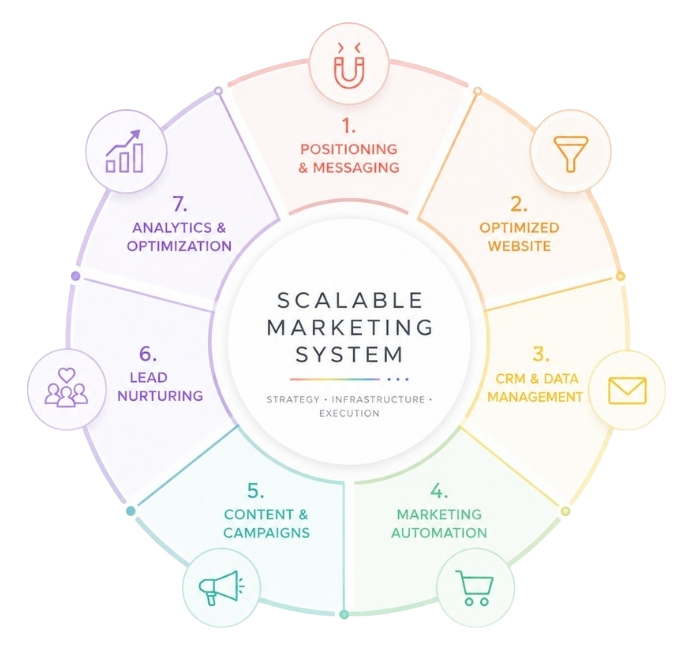
The 7 Core Components
A marketing system is the connected structure behind your marketing efforts.
It’s the combination of strategy, messaging, content, websites, CRM systems, automation, workflows, analytics, and customer experience — all working together intentionally instead of independently (click to see examples in my portfolio).
A true marketing system creates alignment between the different parts of the business so every touchpoint supports the same goals, messaging, and customer journey.
Signs Your Marketing System Isn't Connected
Many businesses already have marketing activity happening. The issue is that the activity isn’t connected strategically or operationally.
Your marketing feels inconsistent
Messaging changes across platforms and your brand experience varies from one touchpoint to another.
Leads fall through the cracks
There’s no reliable process for lead capture, follow-up, nurturing, or customer onboarding.
Your tools don’t communicate well
Your CRM, website, email platform, forms, analytics, and automation tools operate separately.
Marketing depends too heavily on manual work
Tasks that should be streamlined still require constant oversight and repetitive effort.
Reporting is unclear
You’re investing time and money into marketing, but it’s difficult to understand what’s actually driving results.
Marketing happens in bursts
Instead of operating consistently, marketing becomes reactive and inconsistent.
Marketing Tactics vs Marketing Systems
MARKETING TACTICS
- Individual activities
- Reactive execution
- Short-term focus
- Disconnected channels
- Manual processes
- Inconsistent messaging
MARKETING SYSTEMS
- Connected infrastructure
- Strategic alignment
- Long-term scalability
- Integrated experiences
- Streamlined workflows
- Cohesive communication
Tactics still matter. But they become significantly more effective when they operate within a connected system.
How Everything Connects
A strong marketing system isn’t built from isolated tactics. It’s built from connected components that support one another across the entire customer journey.
Your strategy shapes your messaging. Your messaging influences your website experience and content. Your website connects to lead capture and CRM systems. CRM data supports automation, follow-up, and customer communication. Analytics reveal what’s working so the system can continuously improve over time.
When these pieces are connected intentionally, marketing becomes more consistent, scalable, and effective.
How to Build A System
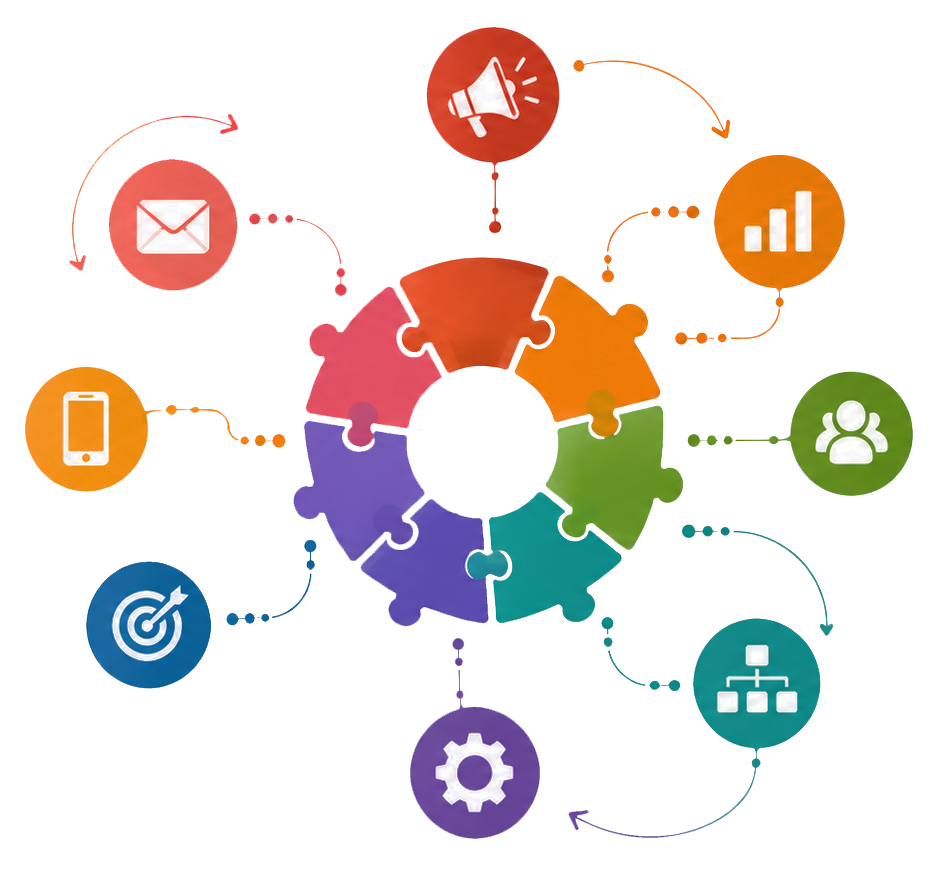
A strong marketing system doesn’t happen by accident. It’s built intentionally—one connected layer at a time. Follow this step-by-step framework to create a system that supports growth today and scales with you tomorrow.
Clarify Your Positioning
Define who you serve, what you offer, and why you’re the right choice.
Align Your Messaging
Create consistent messaging that connects your brand, website, and content.
Optimize Your Website
Build a website that communicates clearly, builds trust, and drives action.
Implement Your CRM
Centralize your data so you can understand, segment, and serve your audience better.
Build Automation & Workflows
Create automated processes that nurture leads and create consistency.
Create Content & Campaigns
Build valuable content and campaigns that attract, engage, and convert.
Track, Measure & Optimize
Use data to understand what’s working and continuously improve your system.
Common Marketing System Mistakes
A successful marketing system isn’t about having more tools or doing more—it’s about having the right foundation and integration.
Buying Too Many Tools
More tools don’t equal better results. Too many platforms create complexity, higher costs, and disconnected data.
Automating Before Strategy
Automation without strategy leads to ineffective workflows and off-brand communication.
Disconnected Messaging
Inconsistent messaging across your website, emails, and content creates confusion and erodes trust.
No CRM Structurer
A CRM without structure leads to messy data, missed opportunities, and poor customer experiences.
Inconsistent Follow-Up
Leads fall through the cracks when follow-up isn’t timely, consistent, and automated.
Focusing On Social Media
Social media is only one piece of the puzzle. Relying on it alone limits your reach and control.
Measuring Vanity Metrics
Likes and followers don’t pay the bills. Focusing on vanity metrics can lead you away from what actually drives growth.
Real-World Examples
SEO Without Follow-Up
A business may invest heavily in SEO and successfully increase traffic, but still lose leads because there’s no CRM structure or nurture system after conversion.
CRM Without Structure
A CRM without workflows, segmentation, or lifecycle organization often becomes little more than a contact database.
Content Without Positioning
Content created without strategic messaging often attracts the wrong audience or fails to support conversions.
Automation Without Strategy
Automation can improve efficiency, but automating disconnected or unclear processes usually amplifies existing problems.
Why Small Businesses Benefit Most from Integration
Small businesses often feel the impact of disconnected marketing more quickly because teams are smaller, resources are limited, and processes depend heavily on consistency.
Operate more efficiently
Improve customer experiences
Strengthen lead nurturing
Reduce manual work
Improve visibility into performance
Create more sustainable growth
Instead of constantly reacting, businesses can operate from a stronger foundation that supports long-term scalability.
Marketing Works Better When It’s Built as a System
Most businesses don’t need more disconnected tactics. They need clearer strategy, stronger systems, and marketing designed to work together intentionally.
When your strategy, messaging, website, CRM, automation, content, and customer experience are aligned, marketing becomes easier to manage, easier to scale, and significantly more effective.
That’s what creates sustainable long-term growth.